
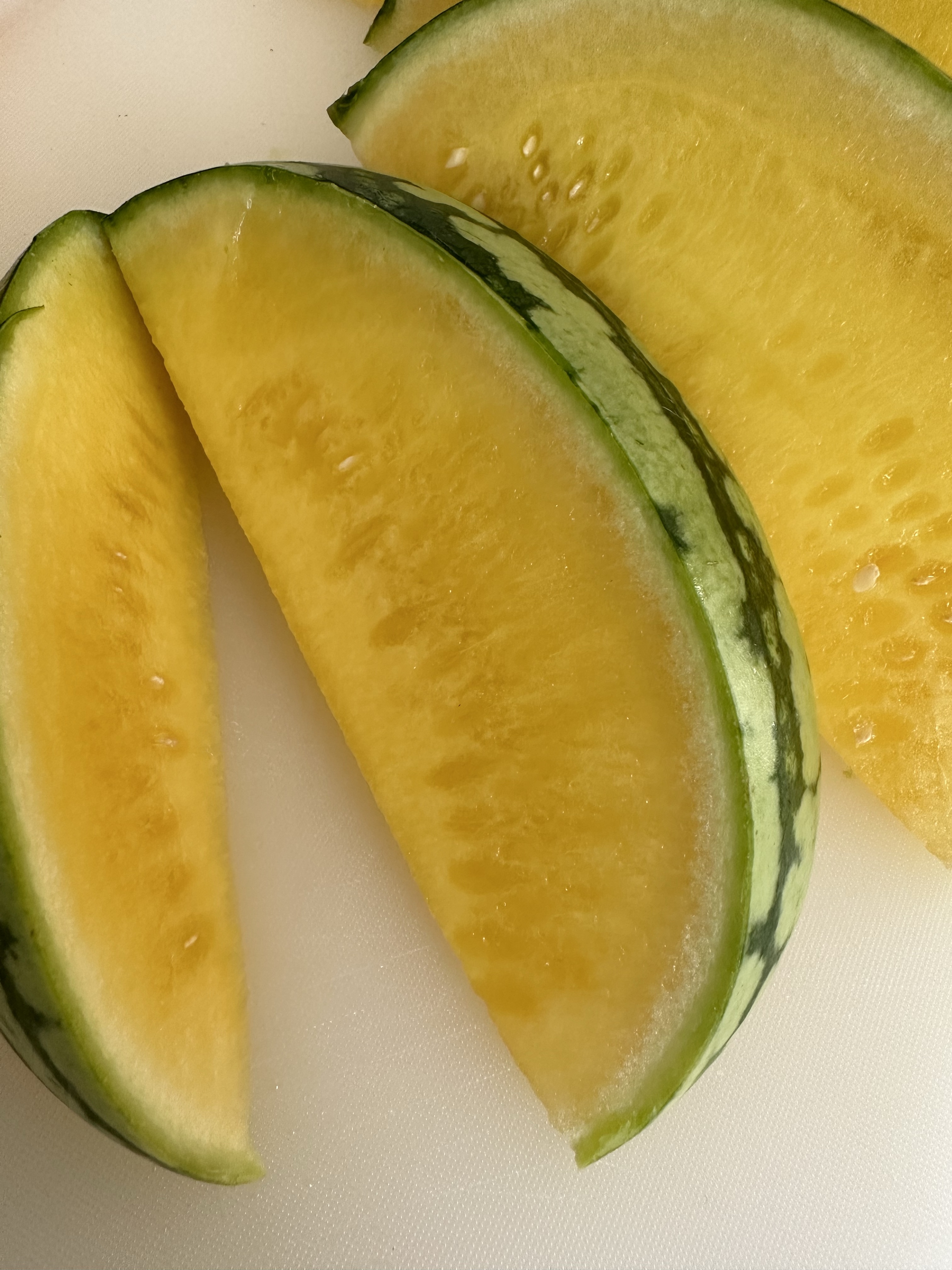
Yellow watermelon originates from the continent of Africa. It is said to be the original watermelon before all of the other colors of watermelon were cultivated. There are many different varieties of yellow watermelon today. Some are sweet, some have a honey taste, and some are slightly sour. No matter what kind of yellow watermelon you like these growing and care guide can help you grow it.
Zones – Yellow Watermelon grows best in Zones 3-12
Sun – These plants need 8 to 10 hours of full sun a day in order to produce fruit. If you live in a hotter climate they will need partial sun to cover them from the hot afternoon sun.
Soil – Loamy soil rich in organic matter is prefect to hold in moister while keeping the roots from sitting in soggy soil. If you live in a rainy climate only water in times of drought or if the soil is visibly dry on the top 2in/5cm
Spacing – Yellow Watermelon rows should be 6-8ft/182-243cm apart and row spacing should be 4ft/121cm apart. Each Yellow Watermelon mound should be 6-8in/15-20cm high and 3ft/91cm wide.
Water – Soak plants only when the 2in/5cm of soil is dry in order to get the roots from rotting. This type of water also applies when the Yellow Watermelon starts to fruit.
Food – You only need to fertilize the soil before planting the Yellow Watermelon seeds. After that they don’t need to be fertilized again.
Annual or Perennial – Yellow Watermelon is an annual plant that will die out every year and need to be reseeded in order to grow more fruit.
Climate/Hardiness – These plants are not cold hardy and grow best in warm and hot climates.
Harvest/Propagation – The fruit can be harvested between 70 and 100 days after planting the number of days depending on the climate it was grown in. You can also tell if Yellow Watermelon is ready by looking at its skin and tendril. If the skin is dark green and the tendril is turning brown the Watermelon is ready to harvest.