
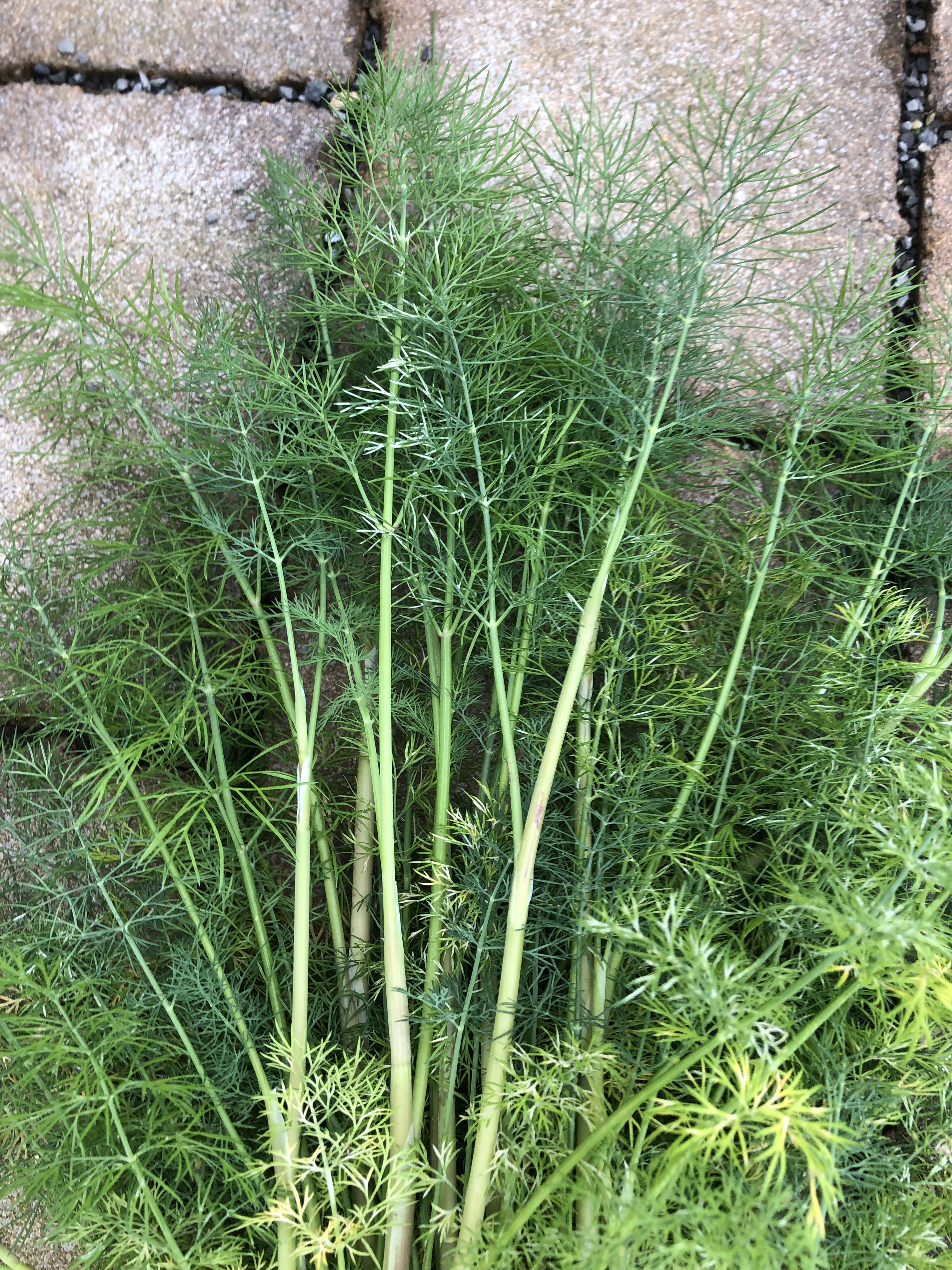
Dill is a biennial herb that grows for 2 years. In cold climates it is grown as an annual and in warm climates it is self seeding and will grow news plants year after year. Dill can be grown in 10 out of the 13 plant Zones. One meth about dill is that it can not be grown indoor but it can. In the garden dill can be use as a bug repellent when planted as a companion plant, and can even repel deers.
Plant Snapshot Facts

Planting
Soil – Dill loves well draining sandy loam rich in organic matter. If you are planting dill in the ground make sure to add organic matter to the soil to amend it if the soil has to much clay in it.
Spacing – Plant dill seeds 1/4in/0.63cm under the soil. Plant the rows 2-3in/5-7cm apart with 10-12in/25-30cm spacing between plants. This will insure that the plants have enough room to spread out and grow.
When to Plant – In warmer zones you can plant dill after the last frost. For cooler zone plant fill in late spring early summer.
Care
Sun – Make sure to plant dill in a area that gets 6-8 hours of direct sunlight everyday but is also protected from high winds. If you live in a area that is windy make sure to stake your dill plant so that it doesn’t snap in half in the wind.
Water – Dill needs 1in/2cm of water every week. If you live in a rain area you may not have to water it but for dry and hot areas make sure to water your dill when ever the top 2 inches of soil feel dry.
Fertilizer – Dill does not need to be fertilized and will grow well without fertilizer. Fertilizing can damage the plant so it is best to avoid it. The best and only time you should fertilize dill would be right before you plant the seeds. If you are growing dill in pots and are watering those pots frequently you can fertilize them once a month with a water down liquid organic fertilizer, when you start to notice changes in your plants color. These color differences may start 6-8 months after potting depending on the side of pot you use.
Pruning – When you dill plant has reached 6-8in/15-20cm in height you can began to prune it. Prune by counting 4 to 5 leaves down and cut just before you get to the last two leaves on the steam. You can leave more leaves on the steam if you like but never cut them all off. If you cut off all of the leaves on the steam they will not grow back.
Transplanting
Dill does not like being transplanted and well I have suggested done it in the past it takes the plant a long time to recover from this and sometimes the die off and never recover. For this reason always plant dill where you want it to grow so that you will not have to move it.
Harvest and Propagation
Harvest – To harvest dill wait for the plant to grow to full maturity and then cut it down from the bottom of the steam. It can then be used fresh or dried for later use.
Seeds – The only way to grow dill is from seed. It can not be grown from cuttings. If you grow your for seeds keep in mind that once the plant starts to set seeds the leaves will stop growing.
Companion Plants
Plants that help dill – Marigolds, Marjoram, Borage, and Nasturtiums all help to repel pests away from dill.
Plants that dill helps – Asparagus, Broccoli, Brussels sprouts, cabbage, Cauliflower, Kohlrabi, Chervil, Corn, Cucumber, Lettuce, and Onion are all plants that dill keep pest away from.